2026

Beyond accuracy in demand-driven land-use forecasts
Albert Alonso, Karolina Pantazatou, Jamal J. Arsanjani, Andres R. Masegosa
In preparation
Land-use forecasts usually hand you a single map as the future, but these systems are noisy and rarely reliable. We take a standard demand-driven model and make it probabilistic. The output becomes a trust layer over the usual map. And once you carry that uncertainty downstream, the very same map can look rock-solid or shaky depending on what you measure.
Adaptive land units from Earth embeddings
Albert Alonso, Andres R. Masegosa
In preparation
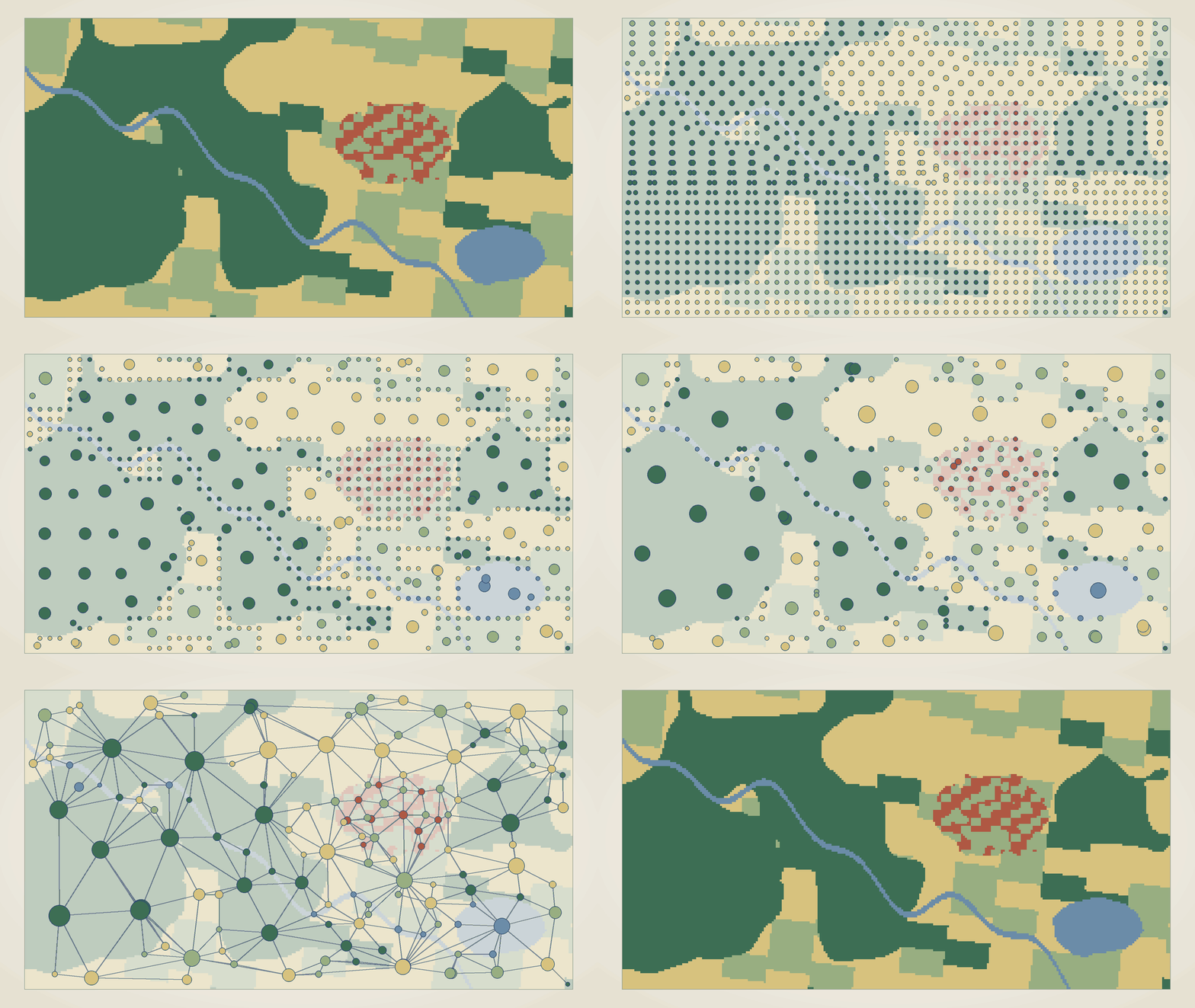
Every land model starts by picking a pixel size, but why should a uniform forest get the same resolution as a busy town? We let the land decide! (okay maybe we do some work too... But we use earth embeddings in an unsupervised manner!) All of Denmark goes from 402M pixels to 1.27M units, fits on a single consumer GPU, and still describes the land better than a regular grid with five times as many cells. Adaptive or die!
Microswimmers lose by swimming selfishly
Albert Alonso
Under review
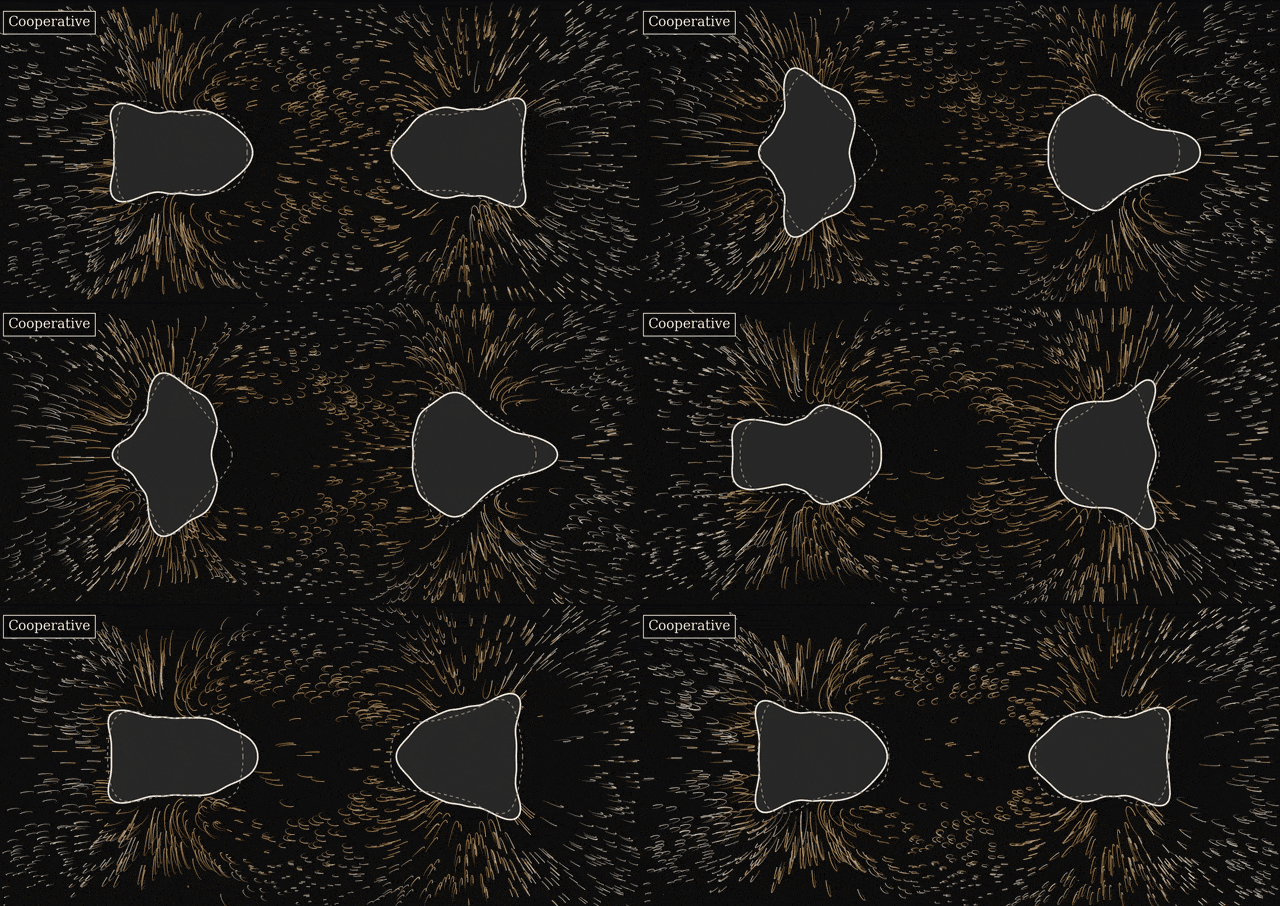
Sometimes we have more power over others than over ourselves. For us that is probably just a feeling, but for cells swimming next to each other at low Reynolds number, that's their life. We use differentiable fluid dynamics to find how soft bodies (offense taken) should wiggle to move forward, and then put them in pairs: each one can help its neighbour far more than it can help itself, which turns swimming together into a social dilemma.
Why scaling will not (always) fix your rollout
Albert Alonso, Luis A. Ortega, Thomas D. Nielsen, Andres R. Masegosa
Under review
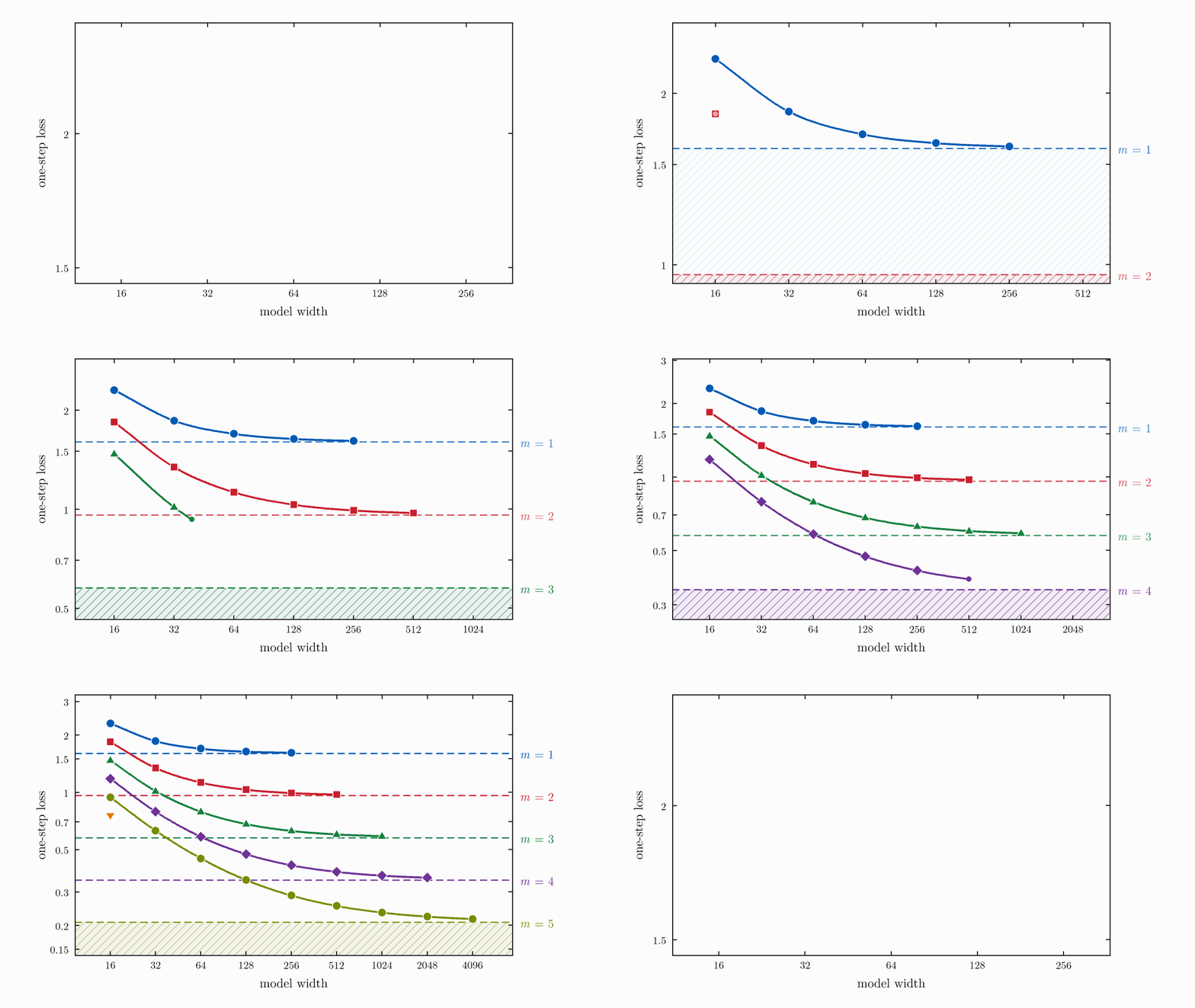
Autoregressive models are trained one step at a time, and then errors pile up when you roll them out (yes yes we know that). The cool part here is that we show that rollout error splits exactly into accumulated one-step error plus a memory floor set by whatever information the state throws away, and it doesn't matter how big your model is, the floor ain't going nowhere, pal.
Energetic costs of reaching the physical limits of sensing
Albert Alonso, Julius B. Kirkegaard, Robert G. Endres
Under review
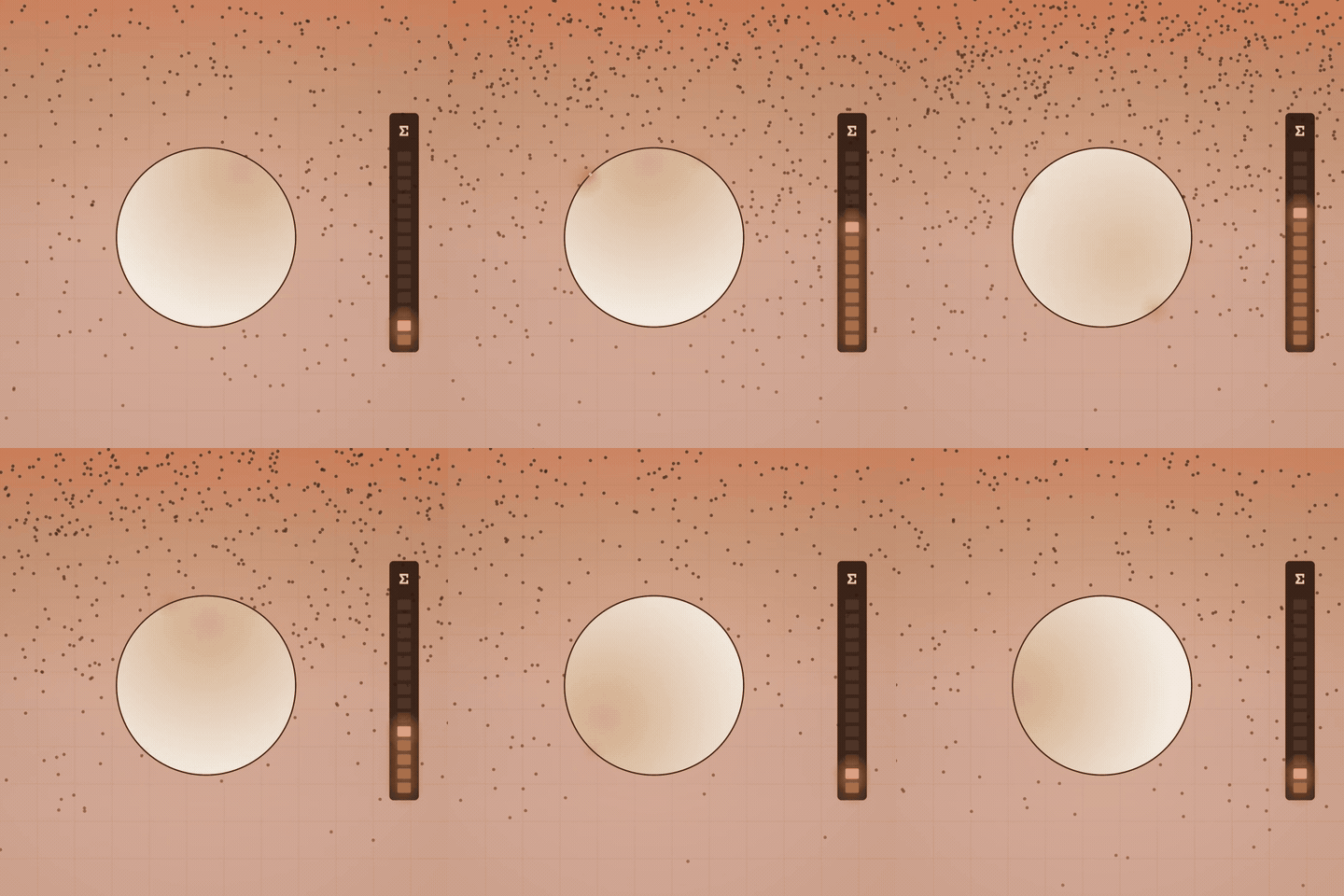
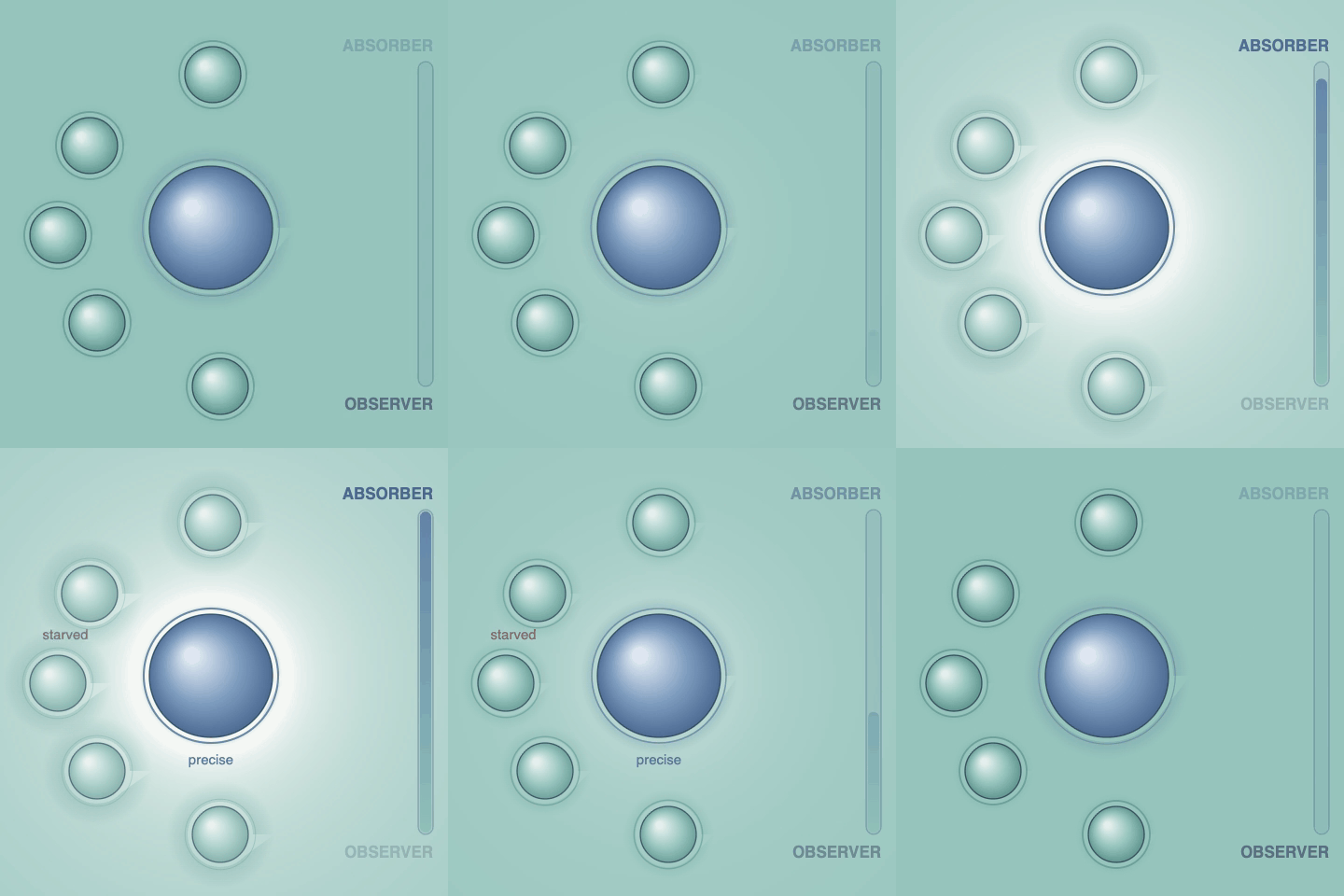
Sensing a chemical gradient means absorbing molecules, and absorbing molecules costs energy. So how much must a cell burn to sense well? We derive nice closed-form relations tying gradient-sensing accuracy to entropy production, and find a happy surprise: cells can get most of the way to peak chemotaxis while paying only a tiny fraction of the full diffusion-limited cost. I guess precision is cheap, but perfection is not.
Limits of cell sensing in observer-absorber assemblies
Julius B. Kirkegaard, Albert Alonso, Robert G. Endres
Under review
A lonely cell senses better by absorbing molecules, which kills off rebinding correlations. That we know. But in a colony, every molecule you absorb is one your neighbour can't. We introduce an observer-absorber model that smoothly interpolates between Berg-Purcell monitoring and perfect absorption, and show the best strategy depends on geometry with Pareto fronts emerging from the tug-of-war.
S. Ramezanzade, A. Bakhshandeh, [...], A. Alonso, [...], L. Bjørndal
International Endodontic Journal - Published
Sometimes it is fun to look at how well students actually do. Across 1466 teeth, the undergraduates turned out to be quite good at endo: 89% effective outcomes. We did some statistics to see what tips the odds the wrong way: smoking, older age, non-premolar teeth and direct restorations. So don't be old and don't smoke. It's not that hard, people.

Malte Silbernagel*, Albert Alonso*, Jens Petersen, Bulat Ibragimov, Marleen de Bruijne, Madeleine K. Wyburd
MIDL 2026 - Accepted (Poster)
Biological organisms have developed extraordinary capabilities to fix broken structures. We exploit that and construct a cellular-automata network to fix common issues on pixel-wise segmentation masks, resulting in a surprisingly effective method that efficiently repairs topological artifacts in medical segmentation models.
Reza Karimzadeh*, Albert Alonso*, Frans Zdyb, Julius B. Kirkegaard, and Bulat Ibragimov
NLDL 2026 - Accepted (Oral)
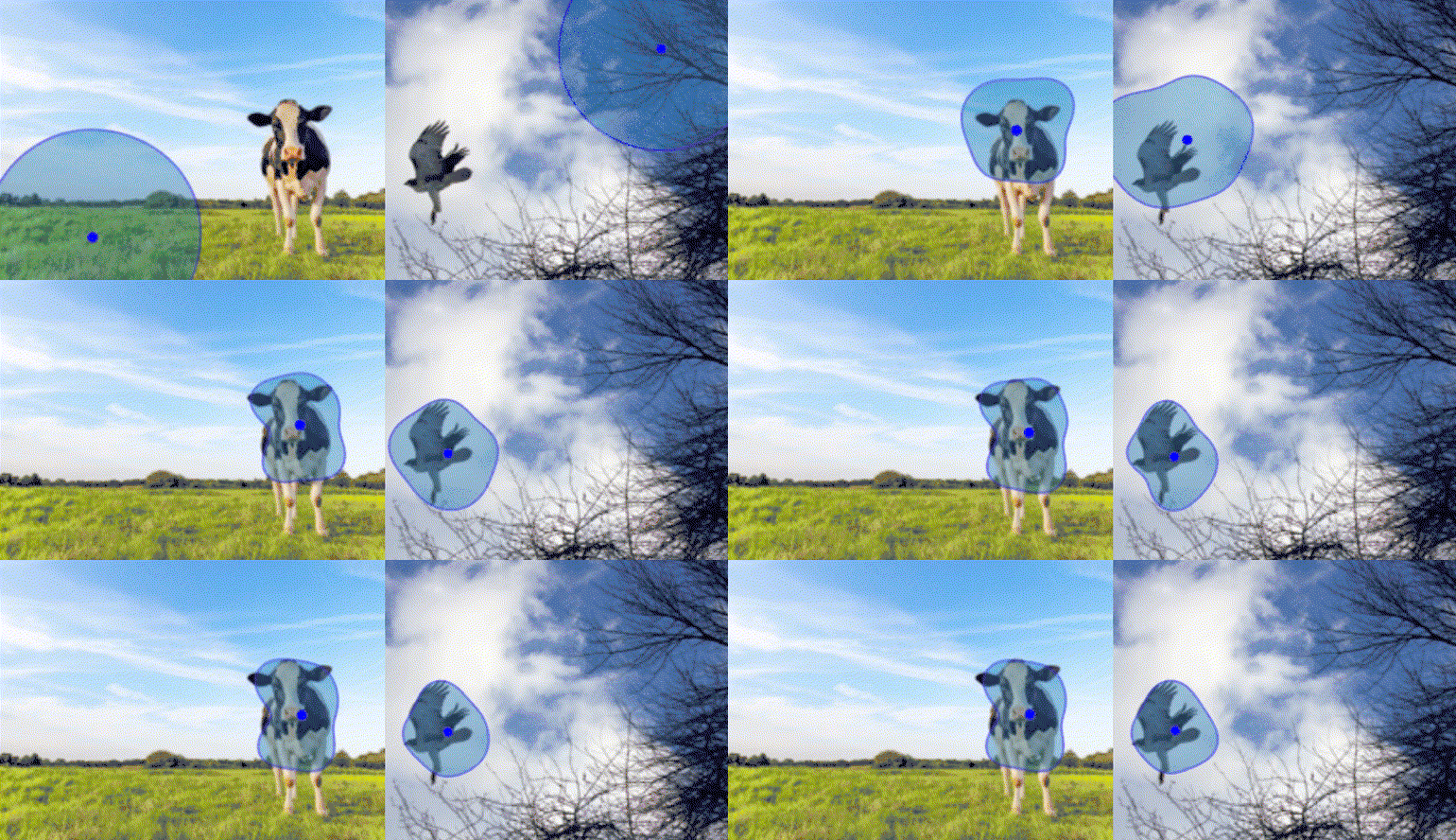
We introduce a new explainability mask where a closed contour 'relaxes' on top of the object that the Neural Network is basing its decision on. The cool part is that we move the contour by propagating the gradients through the network and the masking process. Very simple and elegant.
2025
Frans Zdyb, Albert Alonso, J. B. Kirkegaard
MICCAI 2025 - Accepted (Poster)
Sometimes predicted centerlines look slightly off. We introduce a training-free differentiable rendering approach to spline refinement, achieving both high reliability and sub-pixel accuracy. It serves as a drop-in replacement for the popular active contour model.
Albert Alonso*, Lars Erik J. Skjegstad*, J. B. Kirkegaard
Physical Review Letters (PRL) - Published
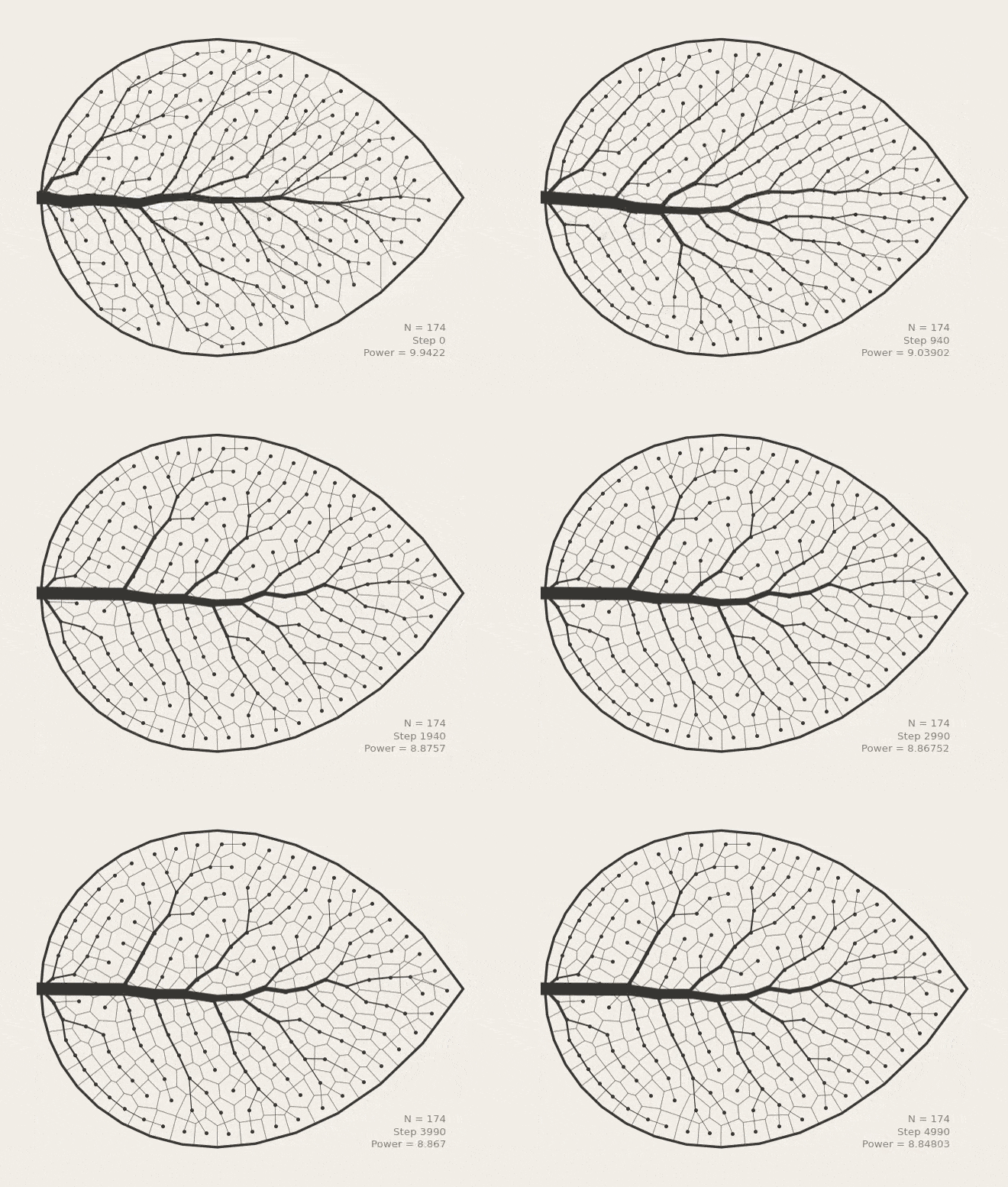
When the hydrodynamic graph model accounts for the energy cost of delivery from node to area, we can apply automatic differentiation to study optimal node positions. Curiously, when the domain is irregular (as in leaves), nodes distribute themselves to maximise efficiency.

Albert Alonso, Robert G. Endres, J. B. Kirkegaard
Physical Review Letters (PRL) - Published
Tiny cells have a hard time sensing their environment due to physical limits. We present a theoretical model exploring how receptors should be placed for optimal information processing. Results show clustering in high-curvature membrane regions, aligning with real-cell observations.
Albert Alonso, J. B. Kirkegaard, Robert G. Endres
Proceedings of the National Academy of Sciences (PNAS) - Published
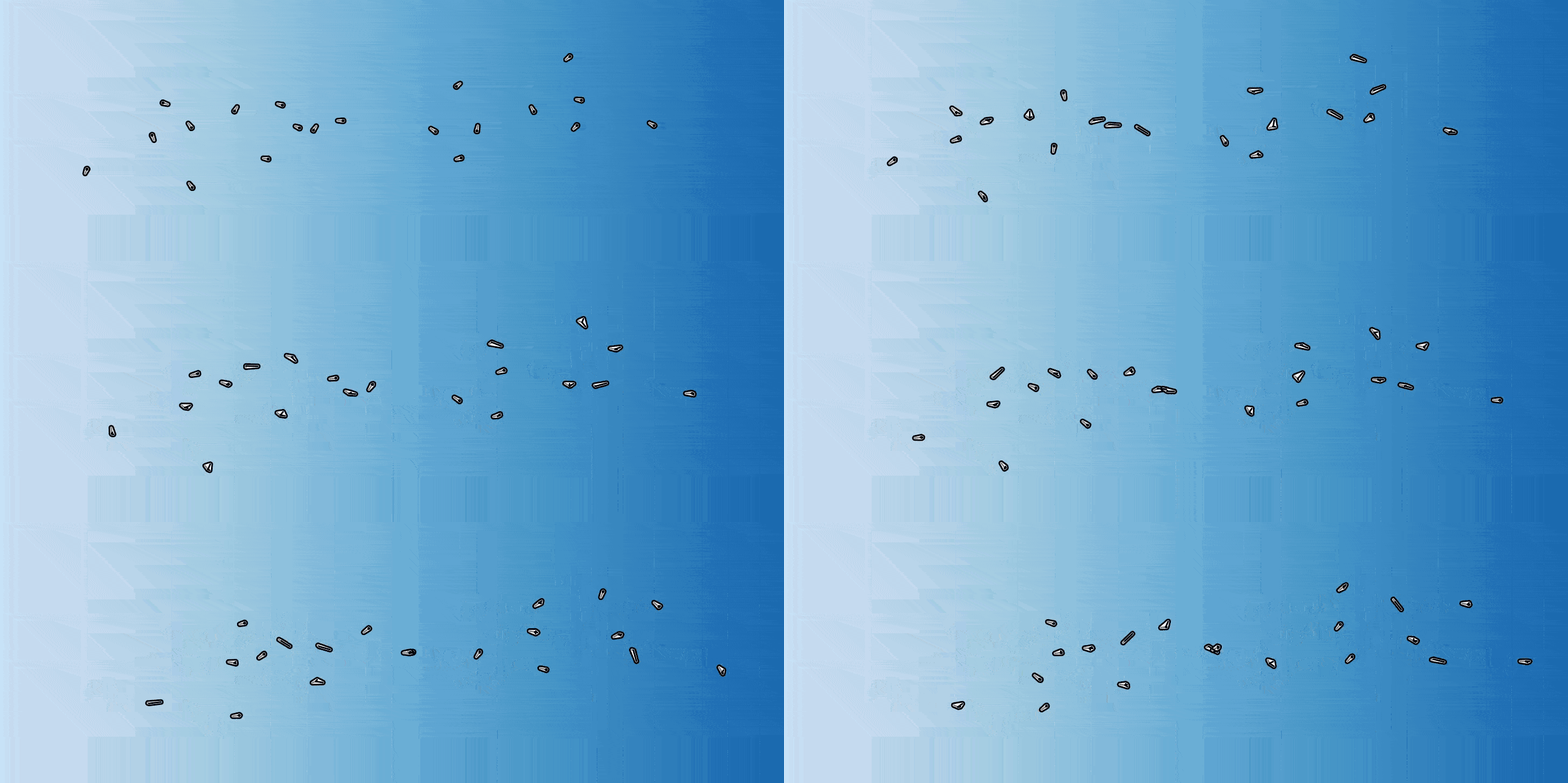
Decision making is hard for microscopic cells, yet essential for survival. We present a minimal model providing quantitative understanding of how cells use pseudopod splitting to achieve high-performance chemotaxis with minimal regulation—mechanical intelligence.
Tuan Pham, Albert Alonso, Karel Proesmans
New Journal of Physics - Published
A stochastic-thermodynamic framework analysing the relationship between irreversibility and dynamical behaviour in high-dimensional chaotic systems.
2024
Albert Alonso, J. B. Kirkegaard
PNAS Nexus - Published
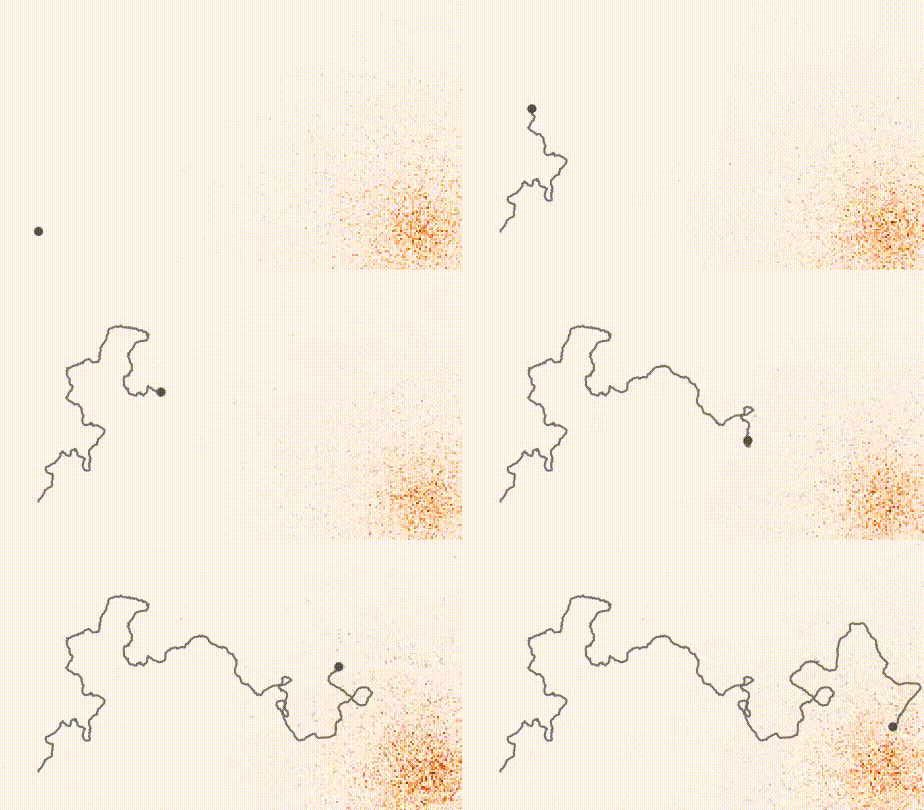
Two main chemotaxis strategies exist in nature: temporal (for small cells) and spatial (for larger cells). We show the transition is continuous and a combined strategy outperforms constrained variants.
2023
Albert Alonso, J. B. Kirkegaard
Nature Communications Biology - Published
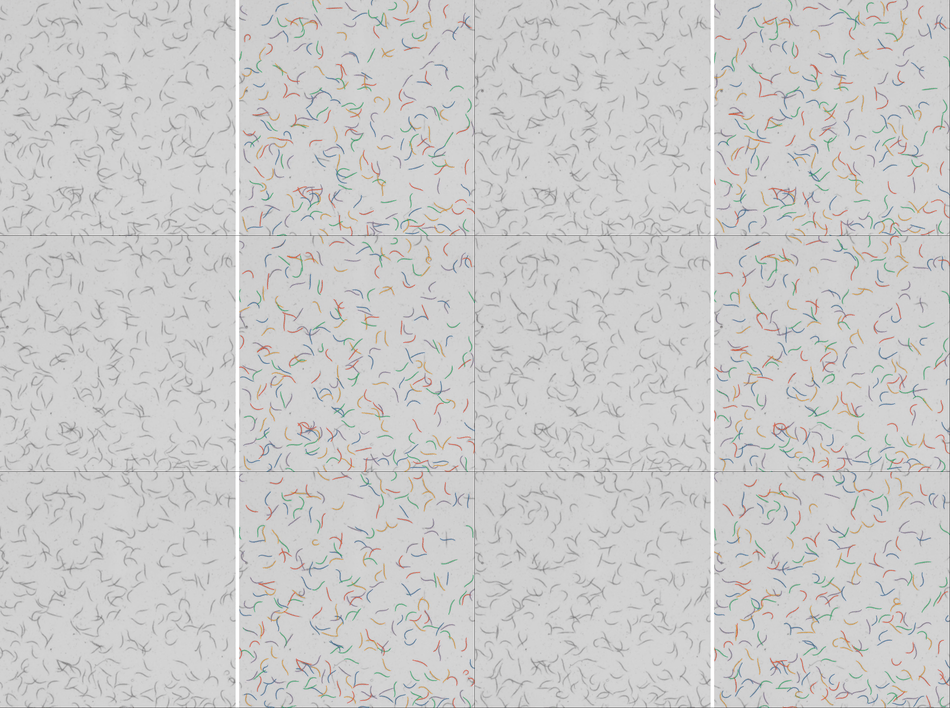
An end-to-end deep learning approach for extracting precise shape trajectories of motile, overlapping slender bodies in high-density microscopy, applied to swimming nematodes.
PhD Thesis
Albert Alonso
Ph.D. Thesis · 2024 · University of Copenhagen - Faculty of Science
Uses differentiable programming techniques to develop computational methods and mathematical models exploring navigation, sensory integration, and behavioural adaptations under physical constraints of the microscopic scale.


